When I’m sizing up an operator, I treat the published return-to-player figure the same way I’d audit a payments ledger in Sydney or Melbourne: the headline number is only useful if you know what sits behind it. Slot machine payout percentages tell you the long-run share of wagers a game is designed to return, but they’re a statistical average, not a promise per session. I’ve spent decades across digital assets, AI, payments, Web3, gaming, eCommerce and FinTech, and I apply the same discipline here: verify the licence, check the support infrastructure, and understand the account controls before you trust any advertised figure. If you’re comparing operators and want a quick reference point that’s already been checked against the usual compliance markers, you can start at https://plinko-online-au.com/aussie and work from there.
What the percentage actually means on the reels
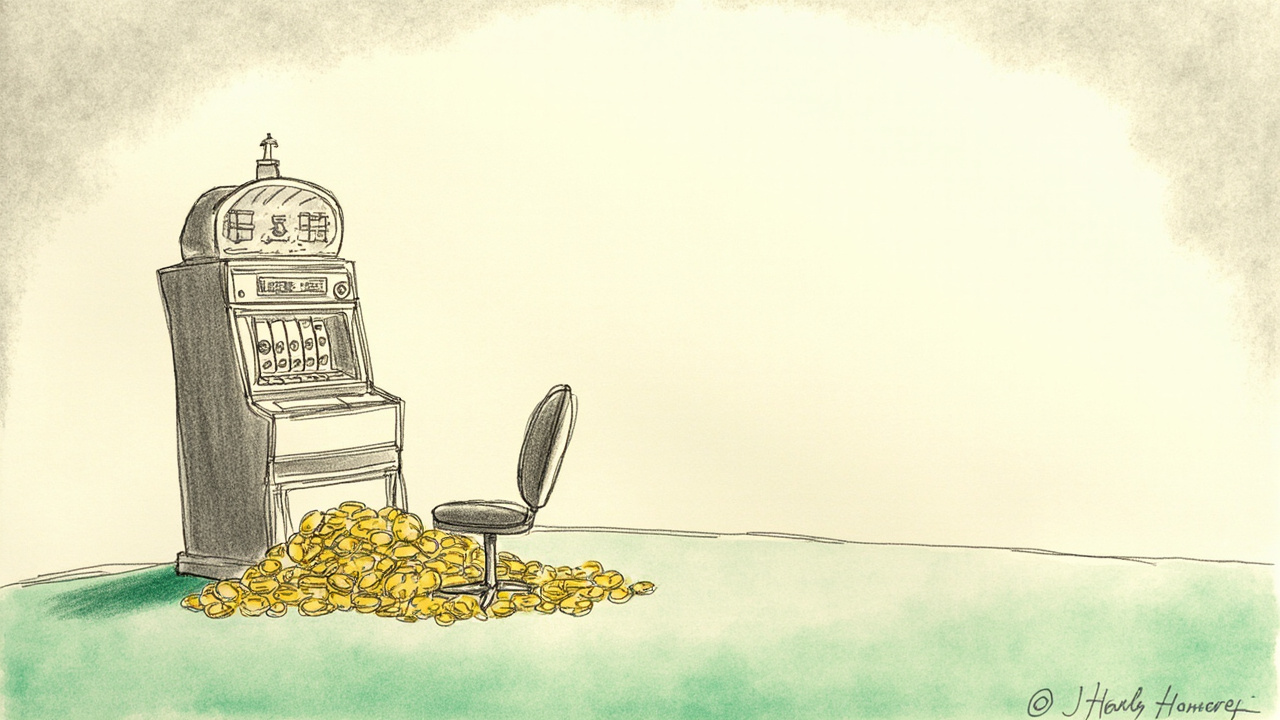
A slot machine payout percentage is usually expressed as a return-to-player rate over millions of spins, not over a single arvo at the screen. That distinction matters because a 96% RTP doesn’t mean you’ll walk away with 96 cents for every dollar wagered on a Tuesday night; it means the game’s maths are built so that, across a very large sample, roughly 96% of total stakes flow back as prizes and the rest is the house margin. In practice, the variance around that average is what shapes your session. Some titles pay frequently in small amounts, others hold back and then deliver heavier clusters, and the same RTP can feel completely different depending on hit frequency and bonus trigger rates. I’ve seen operators present a single figure for an entire lobby when each title actually carries its own range, which is why I always check per-game documentation rather than trusting a lobby-wide average. The ancient Romans gambled heavily, despite laws that technically banned it outside festivals, and even then the house edge was doing its work quietly; the maths hasn’t changed, only the delivery has. If you’re comparing operators and want a quick reference point that’s already been checked against the usual compliance markers, you can start at https://plinko-online-au.com/aussie and work from there.
Two and twelve are the rarest totals, each with one combination, which is a useful reminder that probability is often counterintuitive: a clean average can hide a distribution that’s far from even. When I’m reviewing a lobby, I look for whether the operator publishes per-title RTP ranges, whether the games come from providers with independently checked maths, and whether the site makes it easy to find that detail without hunting through three pages of marketing copy. A transparent operator will list RTP alongside volatility and hit frequency where the provider allows it, and will keep that information stable rather than swapping it out when a promotion runs. That consistency is what lets you compare like with like instead of guessing whether a headline number is being stretched for a campaign.
| What to check | What it tells you | Red flag |
|---|---|---|
| Per-title RTP range | Whether the advertised figure is real or lobby-wide | Only one lobby-wide number with no game detail |
| Provider and maths verification | Whether the game’s return is independently checked | Vague “certified” wording with no auditor named |
| Volatility and hit frequency notes | How the session will feel around the average | No context beyond the percentage |
| Bonus buy and feature transparency | Whether extra costs are disclosed clearly | Hidden terms that shift effective return |
Licensing, security and the support structure behind the numbers
A payout figure is only meaningful if the operator sitting behind it is properly licensed, secure, and capable of handling your account without friction. I’ve built and audited platforms across payments and digital assets, and I apply the same lens here: the licence should be visible, the security should be standard, and the support should actually resolve issues rather than just deflect them. For an Australian adult, the practical question isn’t whether a site can ship a game; it’s whether the operator runs under a recognised licence, keeps data handling tight, and offers account controls that you can actually use when you want to slow down or close out. A site that dangles a strong RTP but buries its licensing details, support hours, or verification steps is asking you to trust the maths without trusting the operator, and I don’t separate those two things.
In regional New South Wales, where connection quality and local support expectations can differ from the capital cities, I look for operators that make their licence number easy to find, keep SSL-style encryption as a baseline, and publish realistic support windows rather than pretending to be available every minute of every day. I also want to see responsible-play tools that are real and reachable: deposit limits, session reminders, time-outs, and a clear self-exclusion path that doesn’t require a maze of clicks. Privacy matters too, because an operator that’s loose with your data is a poor fit regardless of how generous its advertised return looks. If the support team can’t explain how limits are applied or how verification affects withdrawals, that’s a signal to look elsewhere, even if the lobby numbers are attractive.
Common misconception: a high percentage does not mean a soft session
One of the most persistent misconceptions is that a higher slot machine payout percentage automatically means a game is easier to profit from in the short term. The reality is more nuanced, because RTP is a long-run average and your experience is shaped by variance, bet sizing, and how often the game pays anything at all. A title with a strong published return can still feel tight for long stretches if it pays rarely and holds back for larger feature triggers, while a lower-RTP game with frequent small wins can feel more active without changing the underlying maths. I’ve seen players chase a headline number and overlook volatility, then get surprised when the session doesn’t match the average they read on the lobby page.

There’s also a subtlety around how promotions and bonus mechanics interact with the advertised figure. Some operators present RTP for base play while additional features, bonus buys, or special modes have their own effective return profile, and that can shift what you actually experience once you’re playing with site credits or special terms. I’m not saying any of this is hidden by default; I’m saying the percentage alone is incomplete unless you also know how the game behaves and what conditions apply to the money you’re using. That’s why I prefer operators that explain the maths in plain language and don’t dress up a lobby figure as if it were a session guarantee. The more clearly an operator lays out the real shape of the game, the easier it is to judge whether the number is useful or just a marketing hook.
Picking a fit: what I look for before I’d recommend a site
When I’m making a judgement call on fit, I’m not hunting for the highest number on a page; I’m looking for an operator whose structure matches how a player actually wants to behave. That means I check the game mix and providers first, because a strong payout figure is only useful if the titles behind it are from reputable developers with transparent maths. Then I look at bonus mechanics and how they’re described, because a welcome offer or ongoing promotion can be genuinely useful only if the terms are clear and the effective return isn’t being distorted by opaque conditions. I also want payments and currencies to be straightforward, with registration that doesn’t demand more than it should and mobile play that works without turning into a workaround. If an operator can’t keep those pieces consistent, the advertised percentage stops mattering to me.
Support and loyalty matter in the same breath, because a site that can’t back up its lobby with real account handling is a poor fit regardless of how polished the games look. I want to see a loyalty structure that rewards ongoing play without turning into a pressure machine, and support that can answer practical questions about limits, verification, and withdrawals without brushing you off. For an Australian audience, that often means an operator that understands local expectations around clarity, speed, and honest terms, rather than one that hides behind generic copy. I’d rather recommend a site with solid controls, clear licensing, and a sensible game mix than one that leans on a single attractive number and hopes no one checks the rest. If the operator can show its work across licensing, security, support, and responsible-play tools, then the payout figure becomes a useful piece of the picture instead of the whole story.
If you’re weighing up where to play, the practical move is to treat slot machine payout percentages as one input among several, not the deciding factor on its own. Check the per-game detail, confirm the licence and support setup, and make sure the account controls are there when you need them. A site that’s open about its maths and its terms is usually a better fit than one that just flashes a big number and hopes you won’t ask what sits behind it.